Bar Product
EVERYONE WANTS A TROLLEY
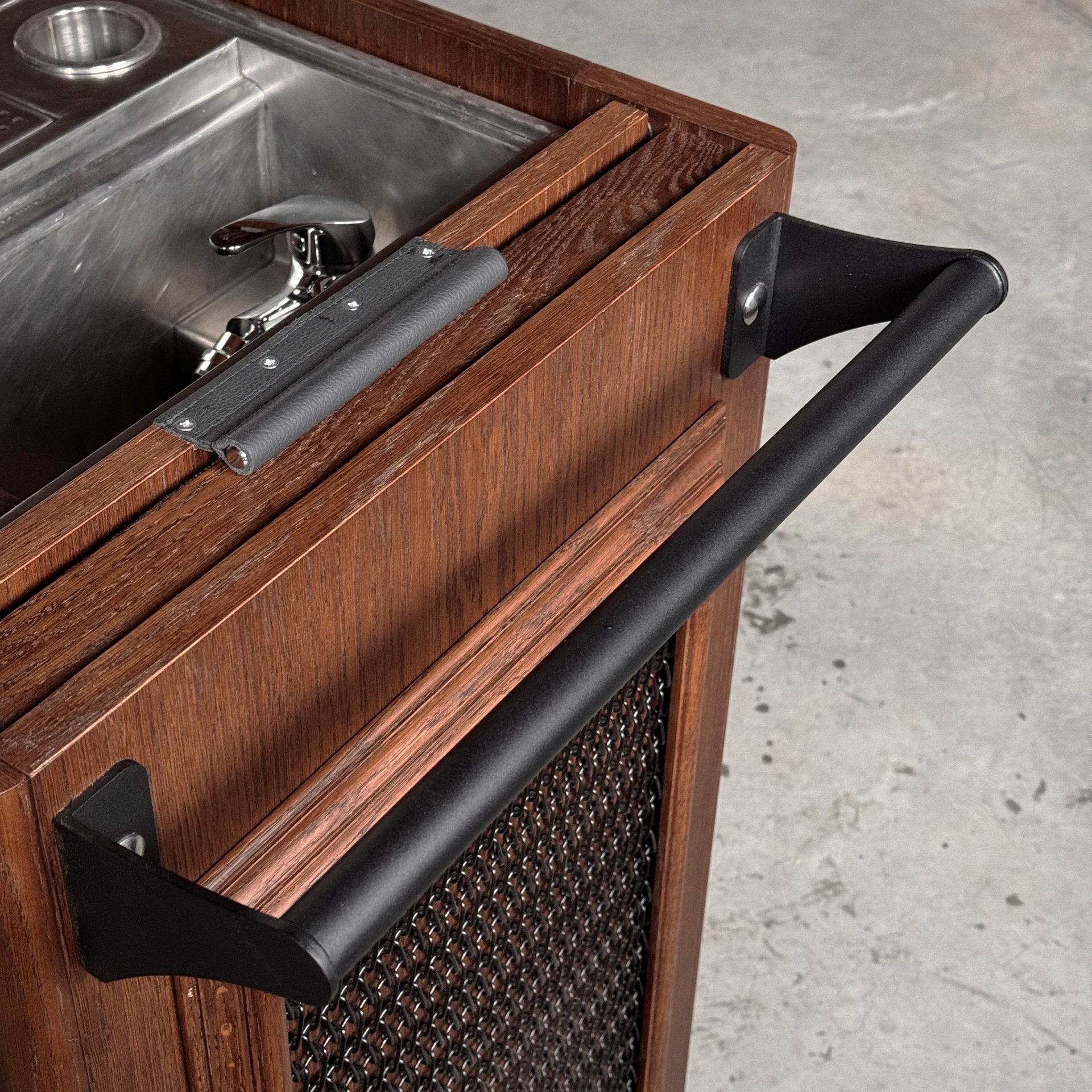
Hospitality in 2025–2026 operates under structural pressure. Labor costs are rising across Europe, the US, and Asia. Urban venues are shrinking in footprint. Guests expect an elevated experience that is different from everything. Meanwhile, capital expenditure for full bar rebuilds remains high.
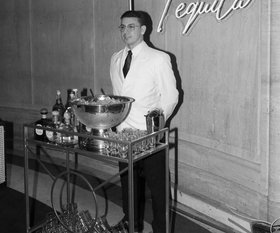
For years, the trolley was treated as a decorative flourish – a theatrical prop rolled out for a martini moment or a flambéed dessert. It lived at the edge of the room – charming, but non-essential.
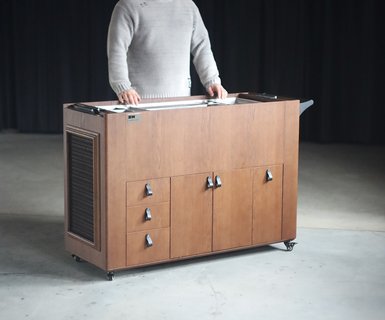
That position has greatly changed recently. Today, beverage programs on wheels are becoming embedded into the operational core of hotels, restaurants, cocktail bars, yachts, and brand events. What once signaled retro glamour now signals spatial intelligence, revenue optimization, and strategic mobility.
And the data confirms that this shift is structural rather than stylistic. According to the Bar Cart Market Report by Introspective Market Research the global bar cart market was valued at approximately $805 million in 2023 and is projected to exceed $1.3 billion by 2032.
A 5.5% annual growth rate in a mature hospitality equipment category is not driven by nostalgia or Instagram aesthetics. It signals institutional investment. In other words, operators are moving away from decorative carts toward engineered, mobile systems.
The return of tableside cocktails has been widely documented by Food & Wine in their analysis of roving bar carts across the United States. Similarly, Town & Country highlighted the resurgence of cocktail carts years ago, noting early adopters across luxury dining.
How beverage programs on wheels are reshaping modern hospitality: Hotels
In hotels, the trolley has evolved far beyond traditional room service. Today it powers suite rituals, lobby activations, welcome drink ceremonies, and roaming aperitivo hours, quietly extending the bar’s presence across the property.
The financial logic behind this shift is straightforward. Instead of investing in additional square footage or rebuilding fixed bar infrastructure, hotels are expanding their experiential reach. A well-designed trolley transforms corridors, lounges, terraces, and private suites into temporary revenue nodes. It allows premium beverage moments to happen wherever the guest happens to be — without architectural intervention.
What distinguishes leading properties is not the presence of a cart, but how intentionally it is integrated into the guest journey. In the following cases, we see how some of the world’s most influential hotel bars have embedded mobility into their service model.
The Connaught Bar, London
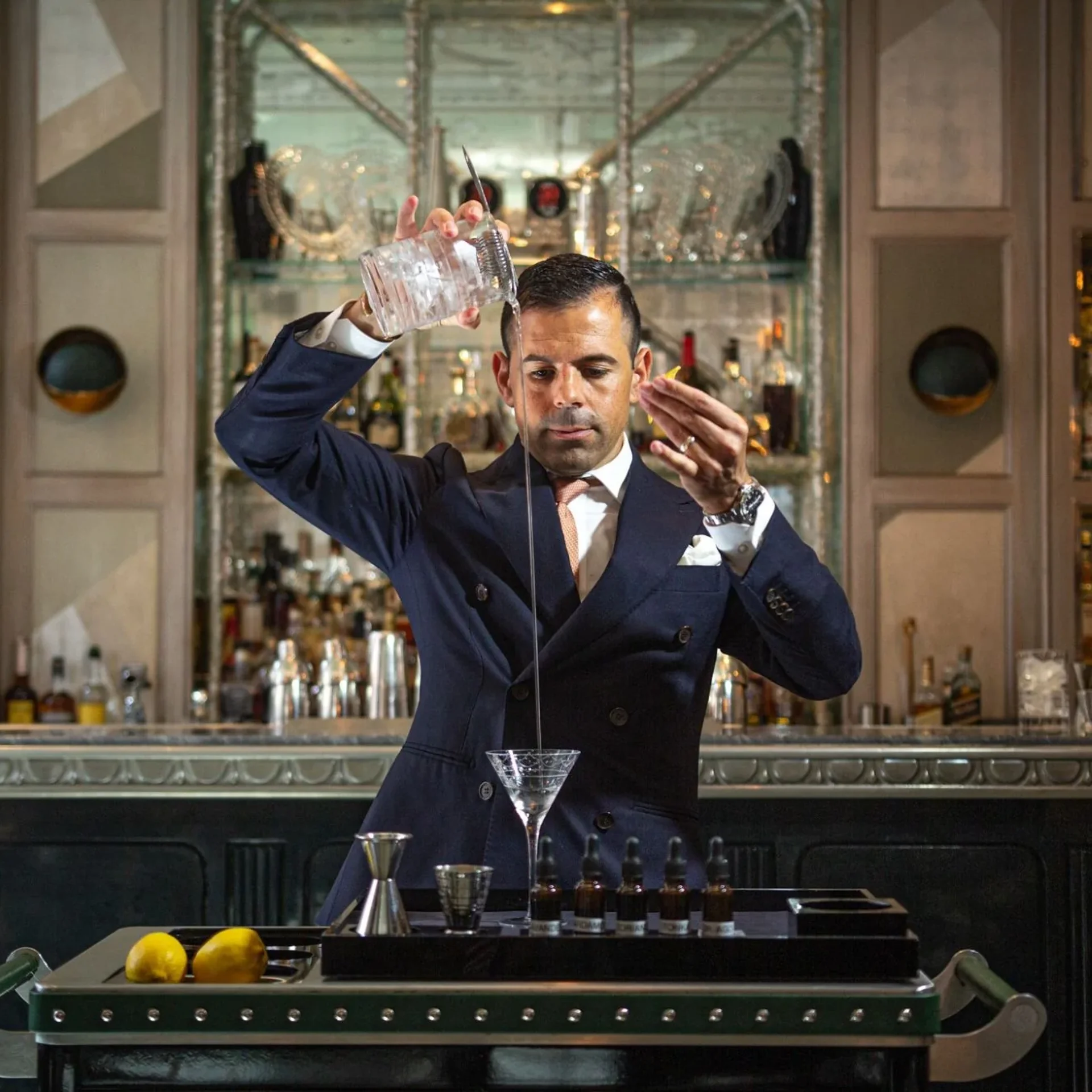
Perhaps the most cited example of trolley integration is The Connaught Bar, London. Their martini trolley has become one of the most iconic service rituals in modern hospitality. The custom-built cart is not simply a delivery device. It is a ritual. The result? The venue has repeatedly ranked in the World’s 50 Best Bars list.
Conrad Singapore Orchard
Similarly, the team at Conrad Singapore Orchard uses a barrel-aged cocktail trolley to deliver matured drinks tableside, reinforcing its identity around craftsmanship and aging programs. Here, the trolley compresses a laboratory concept into a mobile ceremony.
How beverage programs on wheels are reshaping modern hospitality: Bars and restaurants
In restaurant environments, the trolley functions differently. It is less about spatial expansion and more about check average optimization.
At LAVO London the Negroni trolley allows guests to design their preferred interpretation of the Italian classic under guidance. The ritual creates engagement, but more importantly, it drives premium spirit selection.
In Chicago, Swift & Sons elevates the Old Fashioned through a tableside cart featuring multiple fine spirits and smoking variations, transforming a classic into a customizable luxury format.
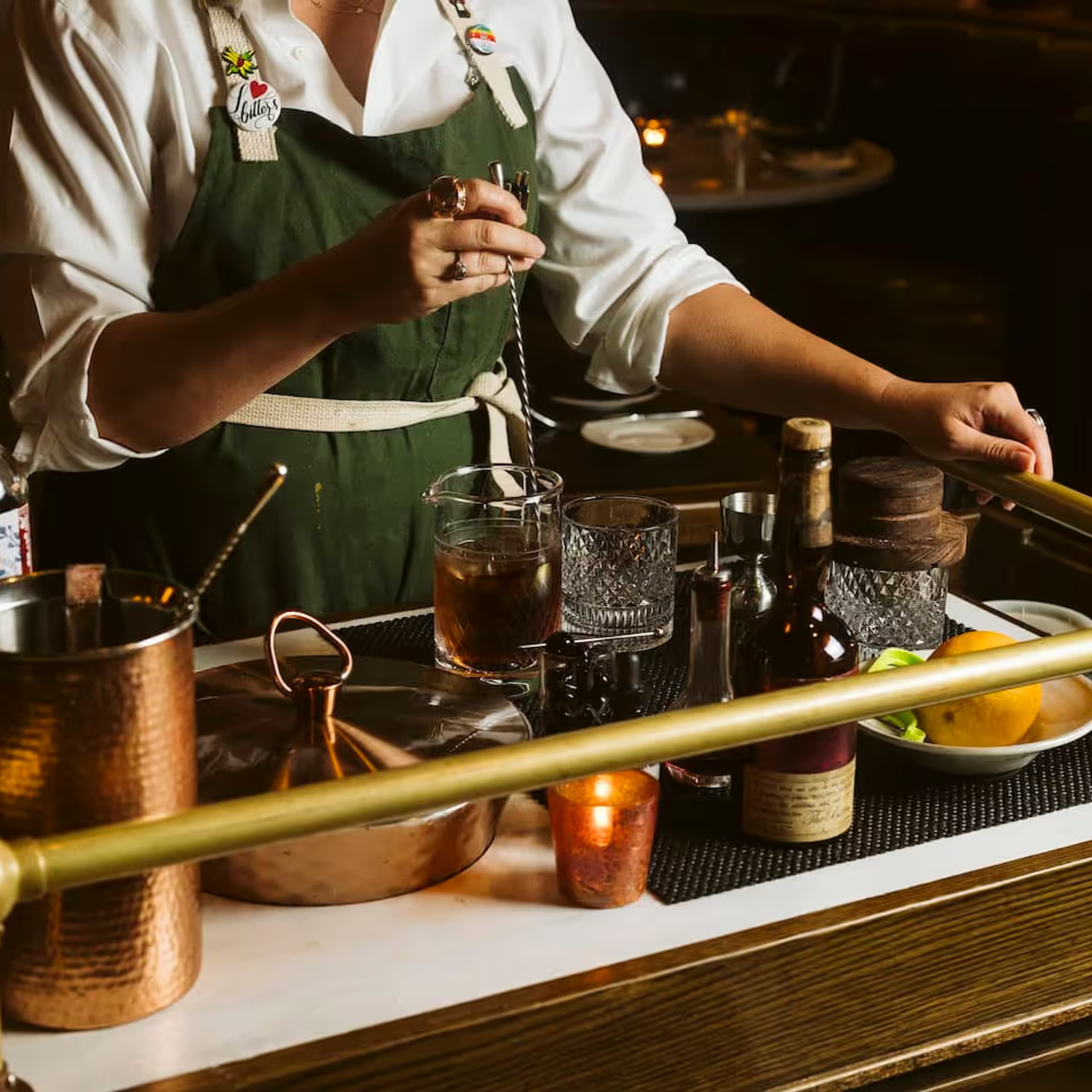
Along with that you can find: digestive cart in Jovanina’s Broken Italian (Denver), Bloody Mary carts (Fleur by Hubert Keller, Las Vegas), Amaro carts (Oro, San Francisco), Scotch carts (Strip House Midtown, NYC), Absinthe carts (Sage, Las Vegas).
These programs demonstrate a measurable effect: interactive tableside service increases perceived value, and perceived value supports higher-margin pours. The trolley becomes an upsell engine disguised as a theatre.
How beverage programs on wheels are reshaping modern hospitality: Yachts
On yachts, mobility is mandatory.
Limited deck space and constant movement demand compact, stabilized systems. Luxury brands have responded accordingly. The collaboration between The Macallan and The Ritz-Carlton Yacht Collection illustrates this direction.
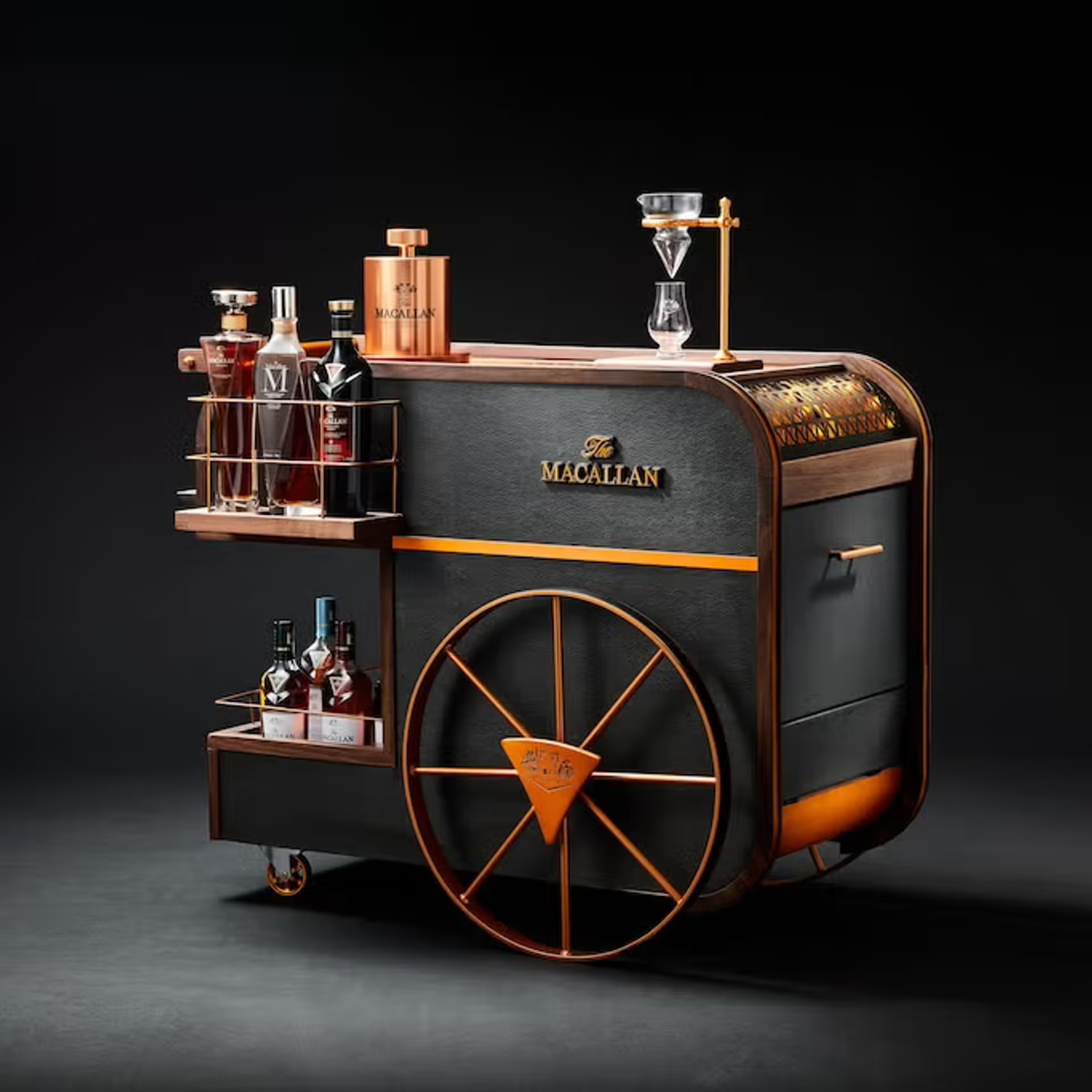
The bespoke whisky cart developed for onboard service blends ritual, engineering stability, and brand storytelling in a confined, high-motion environment. In this context, the trolley becomes a controlled micro-bar. It allows VIP pours, curated tastings, and deck service without permanent installations.
How beverage programs on wheels are reshaping modern hospitality: Brand activations
Outside traditional hospitality venues, the trolley is becoming an activation platform. These carts operate as mobile tasting stations, instantly recognizable brand markers, and high-impact visual magnets.
Brands across spirits, fashion, and lifestyle increasingly use trolleys to host trade show tastings, educational workshops, pop-up bars, collaborative catering events. For example, champagne house Veuve Clicquot has long used branded carts in experiential pop-ups and events.
The advantage lies in scalability. A trolley allows a brand to build presence without constructing infrastructure. It acts as architecture without permanence.
What this actually signals
A 5.5% compound annual growth rate may sound technical, but in practical terms it means the category is steadily expanding year over year, indicating sustained demand rather than temporary hype.
More importantly, growth is concentrated in functional, customizable systems rather than decorative household carts.
The trolley sits at the intersection of all these forces. It:
creates a second service point without construction,
reduces staff steps in high-volume environments,
activates unused zones without architectural intervention,
transforms a static drink order into a live ritual.
The trolley’s transformation from side character to operational system reflects a broader hospitality evolution. Venues are shifting from fixed, centralized service toward distributed, flexible models.
The trolley is no longer about charm – more about spatial intelligence. When designed intentionally, it does not simply move drinks from point A to point B. It restructures how service flows across the room.
That is why everyone wants a trolley.
But the real question is not whether to have one.
It is whether your trolley is furniture – or infrastructure.